
A LINK, Design Korea 2010 from Mimi Son on Vimeo.
Link is an interactive installation where people can record their stories into a cityscape of cardboard boxes. Participants approach the kiosk to record a video of themselves which is stored and replayed through the sculpture.
Link was created for Design Korea 2010 as an interpretation of 'Convergence', the theme of the exhibition. We present a convergence of complex, fast moving technologies from communication and visual computing with low, everyday materials. Furthermore, the audience is requested to cross the boundary of roles within the exhibition by themselves being presented as the exhibition. By existing in the same space as the exhibition, the audience can understand that their existence within the design community can be flexible and cross-disciplinary.
http://www.kimchiandchips.com/link.php
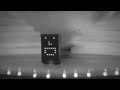
Click on image to play video
Expressive and reactive, designer Crispin Jones’s Tengu is a desktop companion that reacts to sounds from your computer. The face, with eyes, a nose and a mouth, begins to sing, contort and respond to noise. The simple yet effective interface of Tengu is a platform for the user’s imagination. The Tengu jumped to immediate popularity when launched in 2009. Users responded by treating it as an interactive “Mr. Potato Head”, attaching elaborate costumes to the interface.
http://wp.moma.org/talk_to_me/2010/03/tengu/

Personas is a component of the Metropath(ologies) exhibit, recently on display at the MIT Museum by the Sociable Media Group from the MIT Media Lab (Please contact us if you want to show it next!). It uses sophisticated natural language processing and the Internet to create a data portrait of one's aggregated online identity. In short, Personas shows you how the Internet sees you.
http://personas.media.mit.edu/
SoLu was designed to demonstrate André Rangel's theory of correspondence between sound and light at the 'EVA Conference - Electronic Visualisation and the Arts' which took place at the BCS - British Computer Society, London 2010. The proposed theory of correspondence can be accessed here. SoLu is a smaller and simplified version of the previous Colmus produced early in 2009. SoLu gives its users the control over a audiovisual algorithmic composition generated in real-time. This hyperinstrument was designed and produced at 3kta studios. Visual documentation was produced at 'Sala do Coro' from Portuguese Catholic University - UCP.
http://3kta.net/solu/
RiP: A Remix Manifesto from Laurent LaSalle on Vimeo.
Immerse yourself in the energetic, innovative and potentially illegal world of mash-up media with RiP: A Remix Manifesto. Let web activist Brett Gaylor and musician Greg Gillis, better known as Girl Talk, serve as your digital tour guides on a probing investigation into how culture builds upon culture in the information age.
Biomedical engineer turned live-performance sensation Girl Talk, has received immense commercial and critical success for his mind-blowing sample-based music. Utilizing technical expertise and a ferocious creative streak, Girl Talk repositions popular music to create a wild and edgy dialogue between artists from all genres and eras. But are his practices legal? Do his methods of frenetic appropriation embrace collaboration in its purest sense? Or are they infractions of creative integrity and violations of copyright?
This documentary is released under Creative Commons Attribution — Noncommercial 3.0 Unported license.


The capital economy is going to cyclically collapse on itself: this now is a fact. The latest (disastrous) decade has spawned a variety of initiatives to create alternative systems for the exchange of "values", that are not necessarily monetary in nature. These economic systems are varied: they sometimes propose an exchange based on non-monetary resources (such as Time Banking, which allows you to trade your time spent doing something specific for other people); or they can be created by special networks, usually half-closed, in which the sharing of credit transactions and facilitation of internal trade accelerate the local development or the specific market sector, like a real complementary economy. Dyndy , a project by Jaromil and Marco Sachy, is a platform for exchange and dialogue on these issues.
http://www.dyndy.net/