"Paik artista concettuale: scopre ed esorcizza la TV nella triplice natura di mezzo di comunicazione di massa, di broadcast e di oggetto-totem. Paik imitatore della natura, inventore, veggente: nei suoi video concepisce un nuovo linguaggio basato sulla simultaneità e il collage, replicando il flusso continuo e apparentemente indistinto della coscienza e intrecciandolo ad una ininterrotta corrente metaindividuale e transculturale, in tessiture cinetiche e iconoclastiche;"
"La preconizzazione orwelliana della diffusione mass-mediale di una rappresentazione della realtà unica, controllata dall’alto come strumento di controllo e uniformazione, è rovesciata dall’ottimismo di Paik: la televisione, esempio di tecnologia accessibile, può essere un luogo di incontro e condivisione democratico, libero e universale tra genti e mondi lontani. Non si tratta di una positivista fiducia nel movimento ciecamente univoco e progressivo delle conquiste tecnologiche, ma di una riflessione - nel tempo sempre meno utopistica - intorno a una comunicazione globale e a una cultura espressiva alternative a quelle proposte dalla televisione commerciale che conosciamo, che vivono oggi in parte in canali di comunicazione democratici rappresentati da YouTube e dal social network."
"Io conosco bene il mio ruolo: qualcosa che sia tra lo sviluppo dell'hardware e quello del software. E quello che so è che mi riesce bene fare da interfaccia". Paik
è l'approccio hacker alla tecnologia che incontra la vocazione sociale dell'arte; l'utilizzo non convenzionale, artistico, sovversivo di mezzi tecnologici per esprimersi, creare nuovi linguaggi e indurre riflessioni critiche;
Nel suo lavoro del 1965 "Magnet TV", Nam June Paik posizionò una grande calamita sopra un televisore per distorcere la sua immagine; sebbene tecnicamente piuttosto rozzo, questo esperimento ha fatto da precursore per l'elaborazione moderna delle immagini elettroniche, considerevolmente più "sofisticata", che avrebbe caratterizzato la video arte dei nostri giorni. "Magnet TV" è un tipico esempio di hacking e approccio hacker alla tecnologia, una presenza costante nel lavoro di Paik e nei lavori di molti artisti multimediali che lo hanno poi seguito. Prima che i personal computer super veloci con enormi quantità di memoria rendessero l'elaborazione video digitale semplice e comune come l'elaborazione di un testo, gli hack di Paik erano l'unico modo di manipolare le immagini visive in tempo reale o di creare collegamenti tra video e audio.
MicroMega


Durante il programma TV di Jeremy Kyle, The Steve Wilkos Mostra, alcuni hacker sono riusciti a entrare nel live feed di KRTV e hanno annunciato l'attacco degli zombie.
L'annuncio : "I morti si stanno risvegliano dalle tombe e stanno attaccando i vivi, seguite i messaggi sullo schermo che verrà aggiornato non appena saranno disponibili nuove informazioni, non tentate di avvicinare o comprendere questi esseri perchè sono considerati estremamente pericolosi."
KRTV si è affrettata a smentire tutto. Hanno detto: "Qualcuno ha evidentemente hackerato il sistema di allarme di emergenza della KRTV, questo messaggio non proviene dal KRTV, e non c'è nessuna emergenza"
http://www.dailystar.co.uk/news/view/298301/?

Quello che vedete sopra è il Bananaphone, un sintetizzatore, realizzato da Jeff Ledger, che utilizza le banane come fossero i tasti di un pianoforte; L'interfaccia funziona misurando il tempo di decadimento RC. Ogni banana è collegata al suo pin di ingresso proprio sulla scheda Propeller. La capacità della banana cresce quando viene toccata, e questo si traduce in un tempo di decadimento RC più lungo.Il Propeller misura il valore RC di tempo determinato dalla resistenza (interna sul Quickstart) e la capacità del punto di connessione.Quando portate il vostro dito vicino al punto di connessione (la banana), aumenta la capacità e quindi anche il valore RC.
qui il progetto :
http://www.gadgetgangster.com/news/56-jeffs-shop/541-bananaphone-a-touch-capacitance-synth.html

Questa pagina fornisce istruzioni dettagliate su come costruire il proprio PirateBox. PirateBox include ora un'interfaccia di chat shoutbox per le comunicazioni anonime. E' stato configurato per funzionare con molti dispositivi, compresi i plug computers, wireless routers, laptops, mobile phones, e molti altri;
http://wiki.daviddarts.com/PirateBox_DIY

MR-808 - mechanic drum robot from Sonic Robots on Vimeo.
L'installazione robot MR-808 è una replica della famosa drum machine TR-808 del 1980 - con i robot a suonare i suoni della batteria! E' la prima drum muchine che riproduce i suoni della batteria anni 80; Moritz Simon Geist ha creato l'MR-808 , una versione fisica della classica drum machine capace di riprodurre e mettere in sequenza i campioni originali della TR-808 utilizzando strumenti a percussione reali.
http://sonicrobots.com/mr808-eng/

l'obiettivo di questo progetto è quello di generare musica attraverso il movimento grazie agli accelerometri.
- 1 accelerometro a 3 assi
- 1 scheda Arduino
- 1 altoparlante
- 1 brano adatto al suono di merda dello speaker
Il codice è semplice: il ritmo della canzone è implementato e prima di ogni time step, il guanto rileva la direzione della gravità e sceglie una delle tre note della canzone.
È possibile trovare il codice qui:
http://www.instructables.com/id/Arduino-Play-The-Piezo/


There are a lot of locks out there. There are locks open with a key, with a combination of digits, with various bodily parts, or with a correct geolocation. I decided to make a lock that I have not seen yet. Since I am learning to play piano an idea for this project came quite naturally. I decided to make a box that would open only if a correct tune is played.
http://www.instructables.com/id/A-Box-with-a-Music-Lock/

Click on image to play video
The mashup master Mark Gunderson, aka The Evolution Control Committee, has been in the music plagiarism field for the last couple of decades. One of his latest tactical products (after so many others) is called VidiMasher 3000. It's a 122-centimeter rear-projected faux touchscreen, which shows the overloaded Ableton Live software setup of loops Gunderson uses during his live, plagiaristic shows.
The VidiMasher 3000. Based off of Johnny Chung Lee's whiteboard, we assembled a four-foot rear-projected faux touchscreen. It's perfect for our Wheel Of Mashup shows, which depend on an overloaded setup of Ableton Live. Because it's overloaded, it's very difficult to mouse quickly and accurately enough to mash things up on the fly. The touchscreen solves that.
http://evolution-control.com/index.php/experiments/videos/151-video-mashup-screen-demo/
mechanical tumor from Mio I-zawa on Vimeo.
All people who have a digitally related job tend to develop a unique relationship with their computer. The machine is often humanized and referred to as a living creature. Depending on the day it could be a "good girl" who is in perfect shape and behaving properly, or a bad boy who doesn't want to work. The computer suffers imaginary illnesses as well. In the world of interactive media artist Mio I-zawa our machines develop a "mechanical Tumor". Mechanical Tumor is a biology inspired device that consists of a shivering chunk of fleshy organic-looking material that expands and contracts depending on the amount of stress your computer is experiencing. Equipped with a series of motors and pneumatic actuators, the mechanical tumor pulsates gently when the CPU load is low. When the CPU load is high, the tumor's air compressor is activated, causing the lump of flesh to inflate, giving the user a very tangible reading of the computer's stress level. When exhibited at IDD gallery in Shibuya people were invited to touch and feel the "skin of your computer". Still, it is hard to say if this is a metaphor describing the consequences of work addiction or if it is just a creepy example of data visualisation.
Valentina Culatti
http://i-mi.org/


Click on image to play video
This is my steampunk record player. Details available here:
http://www.asciimation.co.nz/bb/2010/11/30/a-steam-punk-record-player
This is a small steam engine I made, mainly from bits of junk around my garage, playing a Sex Pistols punk LP. The engine speed is controlled by a throttle being driven from a servo controlled by an Arduino. The RPMs are measured by a coil detecting the passing of six magnets in the edge of the platter and the approximate revs are displayed on an analogue meter. I am using the PID controller library to do the work out how to control the servo based on the input speed. The safety valve is making the whistling noise at the start as steam pressure is built up. A small flick of the platter will start the engine and then the Arduino takes over trying to maintain 33 1/3 RPM. At the end the meths burner runs out of fuel so the steam pressure, and therefore the speed, drops. You can see the Arduino trying to throttle up to maintain the speed right at the end.
Click on image to play video
is an installation created by Yann Seznec and mushrooms expert Patrick Hickey. As the title suggests, Seznec's intention was to translate the movement of spores into sound. The phenomenon is largely confined to the undergrowth and - as such – is usually out of the reach of human perception. To address this idea the artist has created an elaborate installation in which mushrooms are isolated in glass containers. A magnifying glass focuses on the cap, which is irradiated by a laser beam. A camera, placed outside the container, films the scene and, using special software (written in Max / MSP and Jitter), several parameters are plotted, including the number of spores and the direction of their movement. These same parameters are transformed into input to drive (thanks to Arduino) musical instruments (a mini percussion section, some glasses etc.) created by Seznec using small solenoids. The viewer becomes aware, thanks to the sense of hearing, of the fall of the spores; and feels a childlike sense of wonder: we are like children who see a natural phenomenon for the first time.
Vito Campanelli
http://www.theamazingrolo.net/category/spores/
FlickFlock from Jordi Puig on Vimeo.
Interacting with Flick Flock:
As soon as the body starts to move in the space, changes in the urban place take place. There are different potential changes that may take place (one at a time or simultaneously): (1) User is moving freely (i.e. the position of the hands and head are continuously moving in space wider apart from each other or in a certain direction) triggers the camera movement/panning and the lighting or changes of scene in the virtual environment (2) Within the flickering bubbles displayed in the sky, video captures of previous interactions from different people or the current user him/herself are displayed. These video captures try to play as much similar or opposed movement as possible from the pool of captured video. (3) The panning of the sound is also influenced by the movement of the body (e.g. movement to the left triggers a sound on the left speaker).
http://www.vimeo.com/8195788

Click on image to play video
Inspired by Littlescales Toriton this is a tryout with an ldr into PD via Arduino. The values coming into PD are looking up positions in a table containing notes (In this case an arpeggio over a few octaves) to add some musicality.
http://www.youtube.com/watch?v=FdGUKEZJy4M
Jardin Solar teaser from Dream Addictive on Vimeo.
JardínSolar - SolarGarden — by Dream Addictive — is a series of sculptures that explore the field of sound interaction, using renewable energy as supply source. The intention is to integrate open source hardware and software, and solar cells as energy source, proposing a series of prototypes that generate audio and relational interfaces.
The creatures in the “solar garden” are entities of light. They feed themselves from electrons, process their energy and translate it into electronic songs. They are sociable and sensible machines, they like public space, where they can call people and invite them to play actively with established chance and ethereal frequencies of electronic sound. The sculptures are made of wood, acrylic and plastic, their aesthetics are some times mimetic and some other times are imposed on landscape, decomposing space at a visual and sound level.
http://vimeo.com/11630670

Everywhere we go today we are constantly under surveillance by cctv networks. Video Sniffin' is way to turn these security devices into your own environmental television studio by plucking the wireless signals from the air and capturing them to your own recording device. Why bother to buy a camera when there are so many already within the environment?
http://gearbox.mediashed.org/?section=tutorials&action=view&id=120

The book represents a first tentative reconstruction of the history of artistic networking in Italy, through an analysis of the realities which during the past twenty years have given way to a creative, shared and aware use of technologies, from video to computers, contributing to the formation of Italian hacker communities.
Written by Tatiana Bazzichelli, with the preface of Derrick De Kerckhove and the epilogue of the videoartist Simonetta Fadda.
Translated by Helen Pringle and Maria Anna Calamia.
http://www.networkingart.eu/contents.html


The tap-dance rhythmic lines are the protagonists in SoleNoid ß by Peter William Holden. Eight glossy tap-dance shoes, placed symmetrically in a circle, are animated by a computer connected with circuits controlling electromechanical valves (solenoid valves) and compressed air hydraulic pistons. The "living" shoes move in a multiplicity of directions beating the time of a Marko Wild composition on special circular platforms. Inserts on the soles, typical of this type of footwear, amplify the continuous movement of the tip-toe-toe-tip that occurs sometimes in a sync and sometimes in other backbeats.
http://www.peter-william-holden.com/installations/solenoid/solenoid.html

Taking a photo means making a memory. Choosing a moment in time and framing a situation. Archiving it or making it public. Either way, we create a visual item that we have an emotional attachment to through our memory. Photos help us to remember moments in our past. Often they even become a memory in their own right. For many, making their moments public through services like Flickr is already part the process of photography itself, creating archives which contain a vast collection of visual fragments of individual lives.
Buttons
Buttons takes on this notion of the camera as a networked object. It is a camera that will capture a moment at the press of a button. However, unlike a conventional analog or digital camera, this one doesn't have any optical parts. It allows you to capture your moment but in doing so, it effectively seperates it from the subject. Instead, as you will memorize the moment, the camera memorizes only the time and starts to continuously search on the net for other photos that have been taken in the very same moment.
http://www.blinksandbuttons.net/buttons_en.html

Transition Soundings (image above, video below) by David Birchfield, David Lorig, Kelly Phillips and Assegid Kidané is an interactive public sound art sculpture located at a bus stop in Tempe, Arizona, America. The installations structure:
"has the appearance of a large transit map with hubs and paths connecting locations across its surface. However, this stylize ‘map’ is actually a large network of sensors and speakers that trace paths in sound across the surface of the wall. As users move and gesture infront of the piece, a network of proximity sensors initiates sonic events that wash across the surface in a fashion that references ripples across the surface of water. Sound events propagate through the network in a way that mimics movement of traffic, ideas, currents, and connections in the networks of our lives."
http://www.asquare.org/networkresearch/2010/transition-soundings

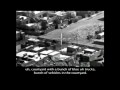
Click on image to play video
5th April 2010 10:44 EST WikiLeaks has released a classified US military video depicting the indiscriminate slaying of over a dozen people in the Iraqi suburb of New Baghdad -- including two Reuters news staff.
Reuters has been trying to obtain the video through the Freedom of Information Act, without success since the time of the attack. The video, shot from an Apache helicopter gun-site, clearly shows the unprovoked slaying of a wounded Reuters employee and his rescuers. Two young children involved in the rescue were also seriously wounded.
http://www.collateralmurder.com/
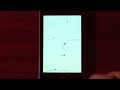
Click on image to play video
Create and control tiny sound-creatures in the shape of letters that react to gravity or each other and generate rhythms and soundscapes. Dive into a micro world of sounds, movement and touch. But beware! Using this app might change your daily reading and talking experience.
abcdefghijklmnopqrstuvwxyz is a sound toy, a performance tool and an art work in its own right. You can play with the letter-creatures and watch and listen how they interact with each other or use them to produce soundscapes like you would with an electronic musical
http://joerg.piringer.net/index.php?href=abcdefg/abcdefg.xml

Death Calls The Tune (lab binaer) from lab binaer on Vimeo.
The mass media penetrate us day in and out with news from all around the world. Over the years we got used to this flood of information and the editors come up with ever more sensational news to catch our attention. But do we really have to know all this? Our work is about the increasing role death plays in the daily news and the over-stimulation coming with it. We want to show the resulting desensitisation.
From all the news items published throughout the world minute by minute, the light sculpture "Death Calls the Tune" selects those that are about doom and misery on our planet. Being driven by a micro-controller, the pick-up of the remodelled record player "burns" the headlines into the steadily rotating light-sensitive disc.
However, the brightly glowing headlines soon fade just as quickly as in our memory. Due to the incredible flood of shocking news, though, there will be no break. Accordingly, the light arm writes headline after headline and one which caught our eye a few seconds ago is immediately overwritten and does not matter any longer.
http://vimeo.com/8074995

On. Off. On. Off. On. What is wrong with the TV? Only you will know it's the TV Poltergeist! Annoy the crap out of friends and enemies by possessing their TV so it turns on and off at random intervals every 5-20 minutes, 24 hours a day, for weeks on end.
erfect for interrupting lame sporting events, obnoxious video games, moronic sitcoms, and poorly written movies! Using the TV Poltergeist couldn't be any simpler. Hide the TV Poltergeist somewhere in the same room as a TV and turn it on. Aim the LED toward the victim's television. Sit back, keep a straight face and enjoy the chaos.
http://www.thinkgeek.com/gadgets/electronic/d794/
fractal explorations 2004-2009 from Regis Hervagault on Vimeo.
trippy fractal loops computed as a backdrop for my electronic live-act back in the days. original is super fluid at 50 fps but was subsampled to fit the current 1Gb upload limit so you could get a glimpse of the lightshow.
enjoy the visual stimulation set along some fine trance music from tomcosm.com
The Image Fulgurator from volker racho on Vimeo.
Short Documentary about Julius von Bismarck and his Image Fulgurator.
Chapters:
1: Intro
2: Holy Obama
3: Magritt and Mao
4: Politics powered by O2
Director:
Richard Wilhelmer
Kamera:
Richard Wilhelmer + Linda Kuhn + mixed footage
more information:
juliusvonbismarck.com
richardwilhelmer.com

Emotoscope is a device that gives you an experience of missing time.
Recent digital recording devices such as digital cameras or video cameras make it possible for us to take thousands of pictures or videos with high quality image, but as much as it becomes convenient, we are losing the opportunity of looking at things more carefully.
For this reason, I sometimes use an analog film camera to shoot my everyday life and play the films with a projector. Every time I watch film, it gives me nostalgic and emotional feelings. Then I start to miss the moment that I was there. The experiences become very precious to me. Why couldn’t I see that the moment was precious to me? If I can see present time as if seeing past experience, how would I feel by that?
http://www.kenichiokada.com/projects/2007/emotoscope.html

Sonicity is a responsive installation, a sonification of the data space. The sounds you hear are the sound of the changing environment, ie the changes of noise, light, temperature of the space is turned into a real time sound stream using dozens of wireless sensors.
This project investigates the real time space and the experience of the gallery visitor as they interact with the space, using data gathered from new technologies. The system monitors the space (the building) and the environment (the city) and captures live real time data ( light , temperature, noise, humidity, position) to create an ambient sonification, an acoustic responsive environment, literally the sound of the micro incidents of change that occur over time.
http://stanza.co.uk/sonicity/

hacking the virtual and real representations of Google Earth (as many artists have done before him), Dutch artist Helmut Smits follows in this continuum with "Dead Pixel in Google Earth". The project is a physical landscaping alteration that burns an 82 cm x 82 cm size square in a field of grass, which measures the equivalent of one pixel of data at an altitude of 1 km when seen with Google Earth.
http://www.helmutsmits.nl/english/deadpixele.html

spinCycle is a turntable that allows you to arrange and play colors visually and musically.spinCycle is fitted with a camera that takes the place of tonearm on a normal turntable. Rather than a needle playing grooves in a record, spinCycle creates sounds based on colors that the camera sees.
http://www.spencerkiser.com/spincycle/


Click on image to play video
Propagations by Leo Nunez, is an artwork based on cellular automata, but it explores different paths. It's made by fifty robots with a turning light on the top. Users can interact with the robots using a luminous interface, and the whole system evolves via cellular automata rules. The robots are autonomous entities and their simple evolving algorithm is reinforcing this feeling once the spectators are close to them.
http://www.leonunez.com.ar/propagaciones.html

Plan your sickness, develop antibodies for the flu and strengthen your immune system the natural way. The INFLU flu collector mask increases the prospect of getting the Swine flu (H1N1) as well as the regular seasonal flu with several hundred percent.
The INFLU flu collector mask has a battery driven micro-fan fitted on the inhalation valve that increases the intake of viruses in ambient air through the respiratory system. The comfortable and convenient mask can be worn in everyday situations such as while commuting to and from work
http://sites.google.com/site/influcollector/

netless. a digital network that is using city public transport as its information carrier. permission-less, distributed and friend-2-friend, netless is an independent communication tactic; invisible digital network that does not need wires or dedicated radio frequencies. alternative communication device that helps its users to avoid such controlled and observed space as the internet. free from governmentally owned medium channels (radio frequency ranges, emission power regulations), proprietary locked technologies and cable networks, netless stays Yours Truly.
http://k0a1a.net/netless/

Although human eyes are marvelous sensors, they don’t tell us the whole story. The effect called persistence of vision limits our ability to percieve rapidly changing light sources. Thus if a light source is blinking or modulating faster than about 20 times a second, it appears continuous. However, there are many types of light around us that oscillate and modulate much faster than that, coming from both nature and technological sources. I’ve been curious to hear these modulations for quite a while.
http://ericarcher.net/devices/sound-cameras/
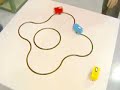
Click on image to play video
A train-style record player. Users connect the chipped pieces of records together to make new tracks. The records pieces are from cheap records bought at jumble sales or used record shops. This record player revives forgotten, old records.
http://www.yurisuzuki.com/soundchaser.html

deadSwap is an offline file sharing system where participants covertly pass a USB stick from one to another. The route of the USB memory stick and the identity of the other participants is not known by the users but controlled by local, independently operated SMS gateways that are kept as a carefully shared secret by their users.
http://www.deadswap.net/